1780’s polonaise/redingote

With the current corona lock down I’ve been enjoying wearing my 18th century middle class jacket and petticoat for walks much more than my normal clothes. So that got me thinking that maybe I should make an upper class or more fashionable ladies walking attire also to have more variety. That sent me down a pinterest rabbit hole of riding habits and redingotes, so that now I’m pretty much bursting with 18th century sewing ideas when I really should be sewing 1890s and edwarian! Well this ended with me deciding that I just had to make one now! I have a lovely white cotton velvet I found a few months ago when thrifting so I wanted to make something out of it first but I will have to visit this subject more later with other styles. So these ended up being my inspiration images:

I knew I wouldn’t want it full length because it being white that would take away quite a bit of the practicalaty aspect, atleast for forest walks. As I searched pattern ideas I came across this lovely hybrid polonaise thing and since I love the polonaise and think this is what the black velvet jacket in the painting is I went for it.

My version has a straight edge on the collar and is based off the collar in the pattern of fashion 1 1780s van dyked round gown. Also my sleeves are my own creation that changed along the way to a cuffed style. Starting out I had no idea what I’d use for the petticoat but looking at those pinterest pictures I liked the combo of white and purple though I normally steer clear of anything purple. I had a bolt of new old stock purple wool that I’m also using for my son’s new 18th c suit so I desided to use that for the petticoat. The collar needed to be lined as the underside of velvet is not so nice looking so I went for a contrasting collar lined with the velvet and covered buttons so that lead to it being logical to have contrasting cuffs too. I’m not sure at all if they are constructed in any accurate way because I still kept the slits from the sleeves in the painting along with the cuffs.

All in all I’m happy with how it came out other than that collar. The patterns of fashion one has a drawstring to pull in the edge in and then it is pinned to the top of the gown. I liked the idea of it but probably because the velvet underside is a bit stiff it doesn’t draw in as smooth as I’d like and the pins work their way out of it easily so I think I’ll go back and whip in on in the front gathering it to fit the neck. The other thing is I’ll need to find a ribbon for looping onto the buttons as with the forward thrust of the style the hooks and eyes gape a bit at the top despite the boning at the the center front seams.

and now for the goodies! guts pictures (sorry for the quality I forgot to charge the proper camera):

The Lining is my basic italian gown pattern, I still need to turn and hem the center back pieces and fell the velvet down to the pleats. sleeves are lined with kids old bedsheets, the bodice with an old linen towel
here you can see the pleats at the sides that are just top stitched down
All seams are felled down separately to reduce bulk and the back pleats are whipped together at the top to keep the velvet from shedding

I Think I need to still make the lace tucker from the portrait for this at some point and my hat still needs work, this was just quickly done the morning of our walk. Now I’ll leave you with the picture galore!

Till next time!

xxx

shoes are American duchess
I really like how my hair turned out for these

1770s middling sort

Most of my historical clothing tends to be more high fashion fancy looks, mostly beacause I do costuming not really historical renacting. Or atleast I haven’t done any renacting but who knows what the future will bring… but I have no current plans on doing it. The thing that really got me originally hooked on 18th centure though is how wearable the clothes are even in modern life, were as my teenage fantasy of a gothic bustle gown is’t very practical. So I have wanted for sometime to do a easy to wear more lower class outfit, something that could transition into my everyday closet aswell. I started this project during the christmas holidays as a quick sew but then the fit was off and other projects that were on a deadline pushed this one to the side. Then corona came along and all of a sudden there were no deadlines, so great time to finish this project!

The jacket is is wool lined in blue linen and the petticoat a wool twill that I didn’t quite have enough of so the back is pieced at the top with the linen I used for the jacket lining. It actually adds a nice bit of fullness and along with my natural lower body shape gives me a great siluette without any padding.

the fabrics are connected with a mantua makers seam
the linen piece is about 4 inches long and the fabric was slightly more narrow that the wool so there is also a bit of width pieced

The front of the petticoat is pleated regularly and on both pieces the linen waist tapes are sewn to the underside of the petticoat. The side seams being selvage edges are just running backstitched together untill the pocket slits.

For the jacket I thought I’d take the easy lazy route and used the jp ryan jackets pattern instead of drafting my own. I made the 1760s version as I liked the legth and the stomacker but omitted the cuffs to make it work better with the slimmer sleeve fashions of the 70s.

Well it turned out once again to actually not be any quicker as the pattern is made for machine sewing and has built in seam allowance that is just way too wide when you hand sew with the english stitch. If you aren’t familiar with this stitch I highly recommend it for any seams were there is a lining and fashion fabric as it seams and finishes the edges on of all layers in one go. Since I was being lazy I didn’t bother with a mock up, I mean it was a stomacer in the front, it’s easy to adjust, what could go wrong!? Well turns out that the one thing since I already had cut the straps separate to avoid fit issues the only thing that could really go badly wrong was the back fit and waist. They both did go wrong. So after ripping my seams at the correct places, cutting it down and resewing it finally was done!

I love the amount of skirt flare in this pattern
the sleeve edges are left raw as was typical for the era

I did two photoshoots with this outfit, one Outlander inspired as the jacket wool reminds me of Claire’s style and the books really inspired me to actually make an 18th century outfit in the first place. In the other pictures I tried for an authentic look but I’ll leave it to you to judge how well I succeeded in that. The apron was a true seed sewing project done in an hour and a half just before the photoshoot and is made out of the same linen as the lining and the top bit of the petticoat. In both pictures I’m wearing my 1770’s to 80’s stays, shift, stockings, garters and one underpetticoat underneath the outfit, no extra padding, though in the outlander ones I’m wering my thicker flannel under petti as it was near freezing that day and in the more authentic ones a thinner though still rather hefty linen one as it was a wamer spring day.

p.s. if you spot the shoes in either pictures ignore them, I was planning on ordering a more practical everyday pair of 18th century shoes this spring before this happened as my only pair are white but now it’ll have to wait for things to get back to normal.

Here are the middling sort or what we would call today middle class pictures:

And now for the outlander styled ones!

The shawl is knitted with indigo dyed merino wool and natural white alpaca. The mitts are knitted out of Icelandic lopi wool.

it even snowed for a bit here

That’s it for now folks! Till next time

xxx

1780s headwear aka the lamp shade hat and the doily

I love the 1780s! One of my favorite things about the decade is all the wacky doody accessories. There is just sooo much going on in that time and lot’s of it feels like they just drew out the wierdest hat they could and then made it. There is a ton of experimenting going on there that leads to really fun fashion. Here are some of the things I love about the 80s https://www.pinterest.cl/mariaviljanmaa/1780s/

2 days before this summer’s 18th century picnic I realized that the hat I had made earlyer was going to be on my daughter’s head there so duh I couldn’t wear it at the same time. And I thought I was all ready in time for once! So off to pinterest I went in search of a hat to make fast. I settled on these wierd gigantic lamp shade looking hats beacause they seemed like a fairly easy make but a major statement piece and a style fairly rarely seen in costuming compared to some other styles.

The next day I headed to the hardware store and bought some wire cable and cut it into a the size I wanted my brimm to be and the size of the base of the crown. I used heat shrink wrapping to keep the ends slight ontop of each other forming a nice firm circle. Then I cut a piece of buckram into the same width as my brimm hoop and 8 1/2 iches tall, folded the bottom around the hoop and whipped it on with linen thread.

Then I cut the buckram almost to the whipped edge every 8 to 10 inches or so and pinned them on to each other so that the top edge made the size of a circle that my crown wire hoop was.

Then I whipped the pieces onto the wire and whipped the flappy bits to the base.

this is done quick and dirty as none of this is visible on the finished hat
see it looks exactly like a lamp shade! 😀

Next I cut the inner fabric to the same width as the buckram but 12 inches tall and whipped the botton edge around the wire eased it to the crown circle size, pleating as I went and whipping it around the wire leaving the extra length to come up from the hat. Then I did the same with the outer brimm fabric only this one I left 16 inches tall since that’s how much I had bought. This time though I folded the bottom over the brimm to the inside and hemmed it on the inner fabric and the whipped the top circle catching both the wire and the inner fabric.

Now I had this wierd floppy tube at the top that will add fluffyness to the finished crown.

in the middle of the night desperately making my hat so the quality of these phone pics is not great 😀

Then I grabbed some light weight linen I had and cut it into a big circle, well as close to a circle as I could freehand at 2 am! No idea how big it was but my guess is about brimm size. Yes if I had been thinking straight I could have used the brimm as a cutting guide but at this point I was just mindlessly making. The circle then is pinned evenly around the crown wire and very crudely gathered and stitched on with a small fold so that the raw edge end up inside the hat. Really even if I wasn’t in a huge hurry this stitching really does not mater what it looks like as long as it’s done as it’s covered by the band anyways.

Then since I didn’t have any super wide ribbon lying around I cut 2 strips of the lining fabric sewed them into tubes and tied them into a fancy bow at the side front. I thought about attaching it with a few stitches but decided against it thinking I’d like to tie it in differnt ways in the future. At this point I gave up. It was wearable and the last hours of the night were dwindling away so I just went to bed and wore it as is.

The day was great and I loved my ridiculous over the top hat.

Ahterwards I cut a piece of that same linen I used for the crown in the width of that crown wire plus a small seam allowance and 4 inches tall. I turned and basted one long edge and both short edges. Then I folded and pressed the raw edge of the left over long edge and turned again this time 0.5 inches in and hem stitched it onto the fabric leaving a channel for a narrow bias tape. Next I pulled the tape through and placed the lining inside the crown applique stitched it in and whipped the edges together leaving the tape to move freely. Now I pulled the tape to tighten it and tied it and finally it was all done.

Now for the next event we had I wore again the same dress, my 1780s round gown but since it was at a museum and involed dancing I figured a cap might be a better headwear option. I had also bought the American duchess 18th century beauty guide book this summer and it has soooo many wonderful caps that I just had to make something.

we danced at the picnic too and granted my hat wasn’t pinned with proper hat pins, it flopped oddly as a result of the twirling

I decided to make the early 80s togue style since I had some kerchief weight linen lying around and many of the other styles I wasn’t to use either cotton organdy or silk organza for. I’m not going to bother with construction details on this since it’s all in the book but I will say it was a fun quick make, took me only little more than one evening to finish. Without the big pooffy hair this really looks like a wierd version of a modern sloughy cap so probably not the best style if you want something to wear instead of fussing with hair.

my hair is also done using the american duchess guide with a cushion from the book as well

The finished cap looks to me like somnething between a turban and a doily plomped onto my head but in a good way.

I love both of these pieces and plan on making many more or the fun styles this decade provides. It also helps keep costuming interesting with minimal effort or resourses, new millinery makes an old gown seem new again! Not that I really have any old gowns yet as I’m just a year into this amazing world of 18th century costuming.

Till next time! xxx

1780s round gown, A nod to Deborah Sampson Gannett

After making my silk italian gown https://sewthroughtime.home.blog/2019/05/10/belles-italian-gown-construction/ I really wanted one out of cotton or linen to have an easily washable version for frolicking about with kids and for picnics and such were spills and other little accidents can happen. Sure I have my cotton caraco but I was never really happy with it eventually I did discover why, the style I had been after when I first desided to make 18th century garments was the polonaise not a caraco but more about that later… Anyways after making my daughters gown https://sewthroughtime.home.blog/2019/07/03/young-girls-18th-century-gown/ I had quite a bit of the duvet left eventhough I had bought the smallest one so I wanted to use that up. I am a firm believer on using as little resourses as possible for extra things like costuming, I don’t want myt hobby to have a huge negative impact on the environment. So when I buy something new I try to use it all and only buy things from sustainable sourses when ever I can.

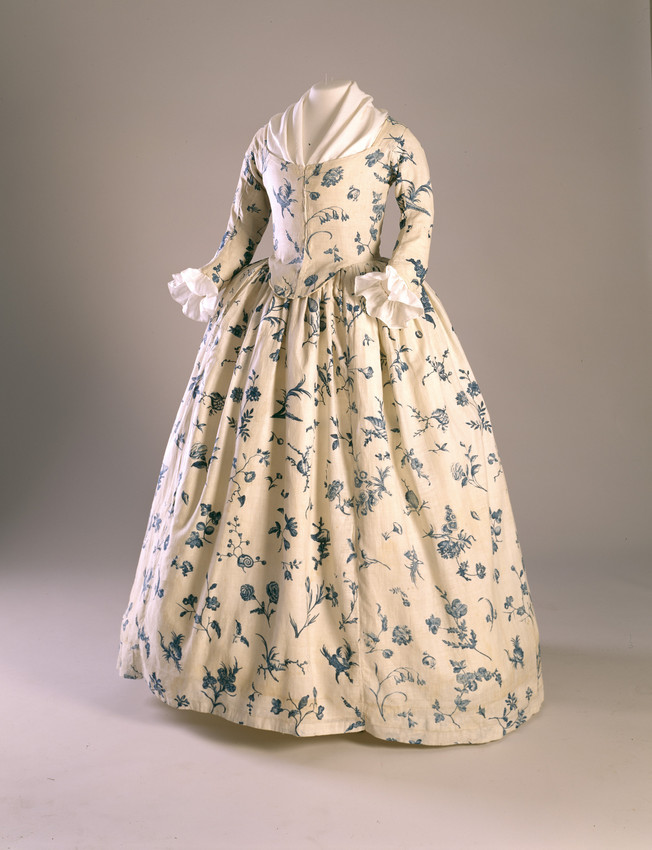
Going through extants I completely fell in love with this one and how similar it seems to the ikea duvet. Sure the flowers and arrangement is different but the overall feel reminds me of it.

After reading the story behind the dress I just had to make it and luckily it was a round gown so I thought I could just eek one out of the leftovers making my costuming also more eco friendly with using up all the material I buy. If you don’t know Deborah’s story I highly recommend you read about it. She was an extraordinary woman who dressed as a young man to be able to serve in the continental army in the American revolutionary war.

I figured since I already had a pattern fitted to my measurements making this would be so easy and straight forward that I could do it easily in a weekend. Well yes kinda it could have… but wasn’t. 😀 Is it ever? First of all the back needed to be refitted to the side. I thought I must have just made a mistake drawing the back into 4 pieces for this one instead of the 2 my previous dress had. That really should have been my first clue that there is something wrong here. Well then my second mistake came from fitting this over my old stays that were of an earlyer siluette and weren’t well fitting on me. I was making new stays at the same time but I figured I can finish the gown and then sew the stay pieces together. The third was that I pleated the skirts half way around the bodice for the back and pleated the rest onto a linen tape that then ties at my waist before pinning the gown on leaving pocket slits at the side and the front bodice to dip lower than the skirts. Sure the basic idea is good, it’s how many extant round gowns are made but with the shape of my bodice the sides come slight higher than my narrowest part atleast in these new well fitting stays so there is gap at the sides. The problems that came with fitting the gown over the old stays were that these new ones being 80s stays already have some forward thrust at the chest when the previous ones were straight. That ofcourse means that my gown is very tight in the chest and very hard to pin on. The other problem came when I tried those new stays on. Somewere between measuring myself for the stays and making them I had lost weight, 2 inches off my waist! 2 inches completely changes the fit of things. Well I got the stays salvaged luckily but ofcourse this meant my round gown is now also too big in the waist, so I’m left with hardly any overlap at the top and with a huge overlap at the bottom so at this point I realized that that first mistake I thought I made in drawing the pattern wasn’t actually a mistake but a clue that something had happened to my body. So for that first picnic I wore stays that were missing the binding and my gown was not only pinned in the front like normally but also pinned at the sides to keep the front up so that the waist tape and my stays wouldn’t show.

I made this hat specifically for this picnic, I’ll post about it soon 🙂

I did like the gown though so I ripped the front part of the skirt off the waist tape and sew up those side seams completely and after studying some extant gown pictures I made new pockets slits by cutting the fabric further forward just at the line were the bodice dips for the front then hemmed the slits and pleated the new back pieces into the bodice and sewed them on. Then the front got repleated and sewn onto a new tape as the old ones got destroyed when ripping it out.

the taking it apart bit was not fun at all my tape had a fairly loose weave to it like many modern cotton tapes do and it just kept on braking

To make my life easier I just left the front as is with it’s problems and just put lacing strips on the inside so that I can pull the gown into shape and just pin it to smooth the edges. With the gown finished I wanted to add the sleeve ruffles as the picture of the original has. I used the american duchess guide book for the construction just made them wider.

This time my interier of the gown looks much better than on the italian gown, sure it’s rough but only the historical accurate roughness no goofups on my part.

The gown is lined in a lightweight shirt linen and a very thin linen table cloth at the shoulders for added durability to keep the dress a really light summer dress for hot days. It is constructed using the american duchess book instructions for the italian gown with the added front bit to make it a round gown and the lacing strips.

The gown is hemmed even so that it can be worn without any rump or with the small rump from the patterns of fashion 5 that I posted about in my previous post. It gives a nice lift and that 80s junk in the trunk siluette but without the added pasteboard it really doesn’t require any extra hem length.

Now with all the fixes I wore it again this past weekend to a living history event at a apothecary museum and gentry home were we performed a few dances and brought the past to life for the guests. I have to admit the front bugged me a bit but I still haven’t made up my mind as to fix it or not. I think I’ll leave it as is for now since summer is almost at an end anyways and see what the situation is next summer. Since I didn’t do anything to make the weight loss happen who knows what weight or size I’ll be next year.

with the rump, my shoes are true edwardian and with the luis heel make a decent stand in for late 18th century pumps
and here is the side profile without the rump just my natural junk lol

I’ll hopefully go out tomorrow to trake some stylized pictures with the hat and then post about it and my cap more. For now here are some pictures from the picnic and the museum for you to enjoy.

till next time! xxx

my hair is padded with an early 1780s type of padding made from the american duchess beauty guide book

1780s underpinnings

I think I’ve mentioned before that my first pair of stays wasa not brilliant. They gave a conical siluette yes but it ended up much more like the easy part of the century than the later that I was going for and also it seemed to make much less curvy than I actually am and they were slightly too big on me. And had the tendency of pushing into my chest painfully if I was at all bloated. So when I bought the pattern of fashion 5 I started on new stays right away. If you are into 18th century and do not own this book already I highly recommend you get it, it really will help you understand stays in a new way.

I decided on pattern 25 reversible silk stays because the idea of having two differnt colored sides for differnt occations sounded really appealing to me. Well since I didn’t have the kind of silk I wanted at hand I decided on making first just plain white ones and then if with wear I find something that needs tweaking I’ll have the next pair be perfect.

and in all honesty that picture with the nipples lifted out of the stays intrigued me 😉

I have a very short torso and the original is made for someone with a very long one so instead of trying to resize the originals to fit me I tried using the pattern dafting method mentioned in the book. Since it only a very abbrerviated explanation of the process and a very different one from the more modern corsetry drafting method I was a bit more than slightly confused. After several hours and 3 times trying I got my drawing to some sort of order.

The idea is that you take your measurements and several stays specific ones to determine the outlines and you draw outy the framework for your stays angled like they will when sewn up. I think the biggest problem I had with this is that alot of it is based on the aasuption that you are wearing well fitting stays when measuring yourself and my body is very moldable so all my measurements change quite a bit once in stays. Well once you get the angles right it’s just a matter of drawing out the outlines for the pieces you need then drawing them out onto tissue paper and adding the boning pattern. It all was going along fairly well till I lost weight somewere in between measuring myself and sewing up the pieces. Then after some fiddling about I ended up with too short tabs and having to leave out a hip flare gore so that the sides do not fit as smoothly as one would hope.

As far as construction goes these are first all finished neatly as individual pieces turning in seam allowances between the layers, then boning channels and eyelets sewn in and lastly all pieces whipped together leaving the center front mostly open. Then when you have made sure the fit is what you want it to be you add the ribbon onto the seams and bind all edges.

The originals are bound in silk and have sewn in shoulder straps of the same material as the stays, since I was making these out of a hemp twill I had and both sides are the same color i just put the ribbon on one side and bound them in leather so that now there is clearly a wrong and a right side to them. As for the straps after wearing them half done to a picnic I decided I wanted to do the twill tape straps I’ve seen in some extants and that american duchess did for their simplicity pattern. http://blog.americanduchess.com/2017/12/simplicity-8578-and-8579-two-new-18th.html

and here they are in all their unfinished glory

I had an old leather coat of really thin leather that i think my mom had thrifted some years ago, it was quite grubby and not one that any of us actually wanted to wear so it became to binding

As I was figuring out how to best attach the leather binding I decided to combine elements from another pair of stays in the book that I also want to make at some point and make underarm leather gards as well.

And here are mine all finished up 🙂

When reading the book and wearing my new round gown for the first time (it needed quite a bit of tweaking after the first wear, blog post coming soon) I realized that while I felt like my split rump was a bit much for a more casual daytime look going completely without and dressing as a fashionable 1780s lady was not really the best idea. So I made a new rump from the book, this one being fairly small with a separate pasteboard bottom that could be added if more volume was wanted. I actually still haven’t made the pasteboard bit as I wanted something that gives a more fashionable siluette but wouldn’t take up much room so that hopefully it won’t change the hemm length much. It was a really quick project, took only little over one evening of hand sewing and stuffing with wool.

Here they are all finished up. I tried wearing my under petticoat and rump under my stays as suggested in the patterns of fashion but with my boidy type without the pasteboard extra bit the rump lifts my stays so that the bottom pokes up a bit so unless I’m wearting another fairly heavy petticoat I think I’ll wear my rump over though then it is harder to keep it from creeping up too high on my waist.

All in all I’m happy, the stays are very comfortable and the rump seems like just the right bit of small extra.

Till next time xxx

Young girls 18th century gown

Since I’ve made everyone else in my family 18th century clothing ofcourse I made a dress for my daughter as well. The first thing she said about it was NO poofy sleeves! Well luckily 18th century doesn’t really do big poofy sleeves and since our oufits are all about 1770s/80s sleeves were quite narrow with just ease for movement, no extra room anywere. Looking through paintings and extant gowns from the time period she settled on this one saying it was like Elsa’s dress and she wanted it.

I actually found the perfect silk brocade for it but since the dress I was making her was for a picnic it felt like asking for trouble, we went to ikea to buy a bedsheet for fabric. At home we had settled on this one:

The idea was that I’d dye it a light blue to give a similar though less shiny look as the original. When we got to ikea in the entrance hall they had a huge display full of their newest bedsheet design blagran and my daughter instantly fell in love with it and asked if it would work for the 18th century.

The color is right and overall design is good as is the space between the design, not too crowded but I am not sure they did that tie dye type thing yet. Since so many points on this are good and since we do picnics and such, historical costuming or living history events rather than strict accuracy renactments we went for it. I bought the smaller duvet size and started making it.

Being in europe I had the same problem as I did with my sons costume, most companies selling kids patterns are in the US and with shipping costs they become rather expensive for the casual costumer… so once again I made my own pattern based on pictures of garments and my adult size italian gown. It was actually fairly simple to draw because of the lack of curves.

I first drew out the front, drew in the lines for the back pieces. As you can see I had to draw out the neckline several times before getting the right line to it.

After I was happy with the shape of the pattern pieces I drew them out again onto separate pieces so that I could cut the fabric. I used a fairly heavy linen tablecloth for the bodice lining and a thinner one for the sleeves. The idea behind using a fairly thick lining with lots of body to it was that since she didn’t want stays, the lining would give her a smooth appearance mimicing that of stays but with out the rigidity that is foreign to a modern child.

The shift fabric got lost in mail so we did the fittings over a vintage dress she was wearing that day since a childs dress is back lacing and quite adjustable anyways the difference in bulkyness didn’t really mater as long as the proportions were right. First try it had pretty much a perfect fit so then onto cutting the fashion fabric and sewing the entire thing. I machine sewed some of the non showing bits and hand sewed the rest.

the only thing that I really changed was re drawing the lower edge so that the skirt would floof out at a better angle closer to her natural waist. I made the entire thing a bit long on her so that the torso wouldn’t become too short once it came time to release some of the growth pleats

The shift fabric was still missing 3 days before the event (that we actually didn’t make it to because on the day she had a fever) so at that point I just grabbed a thinner vintage table cloth I had in my stash and quickly machine sewed with french seams (not historically accurate but works well) a shift for her.

I was very rushed at places with this project and it kind of shows in my stitches if you look closer. The over all look is good though, so I’m pleased with it and she is happy and that is all that really maters anyway. I would really love to still make an under petticoat to give the skirts a bit more volume but for now she didn’t want one so I’ll wait a bit for her to get more used to historical fashion and then ask again. 🙂

As far as the back construction is conserned I couldn’t find any blogs or anything with instructions on girls gowns so I just guessed based on pictures I found. I made the eyelet strips out of a hemp twill I had and sewed them onto the inside of the gown. There is metal boning on the back edges to keep the gown trimm looking and not warping with the lacing. The skirts have a bias tape at the top edge and the very front bit is left separate from the bodice while the back is sewed on and the back seam opened so that the edges can fall down like on a italian gown. The sleeves are left unfinished again like in an italian gown. The growth pleats are eye balled into place and ironed, then sewn with a fairly long running stitch for easy ripping open once she grows enough.

slightly messy insides are completely historically accurate so I don’t feel bad about them
the front were the bodice and the skirt are separate
And tah dah! The messiest stitches in the most noticable place at the waist 😀
Very different sewing quality at the neck were I still thought I was doing ok time wise
Here is the hemm and the growth pleats, the flower vines lined up quite nicely

Next time I make this I think I’ll make the skirt with a separate bib type front skirt piece that ties at the back waist, like typically in a round gown as this construction was fiddly. I actually buyed the lace I used for our 1880s outfits for this one to use at the neck and sleeves but she desided she would rather me leave those out and keep this one plain.

This project used up a little under half of the smallest size duvet cover and is about a size 8 or 9 years with the growth pleats opened maybe even slightly longer so a very cheap project as the lining linens and shift linen were already in my stash, total cost being the 14,99€ I paid for the duvet cover.

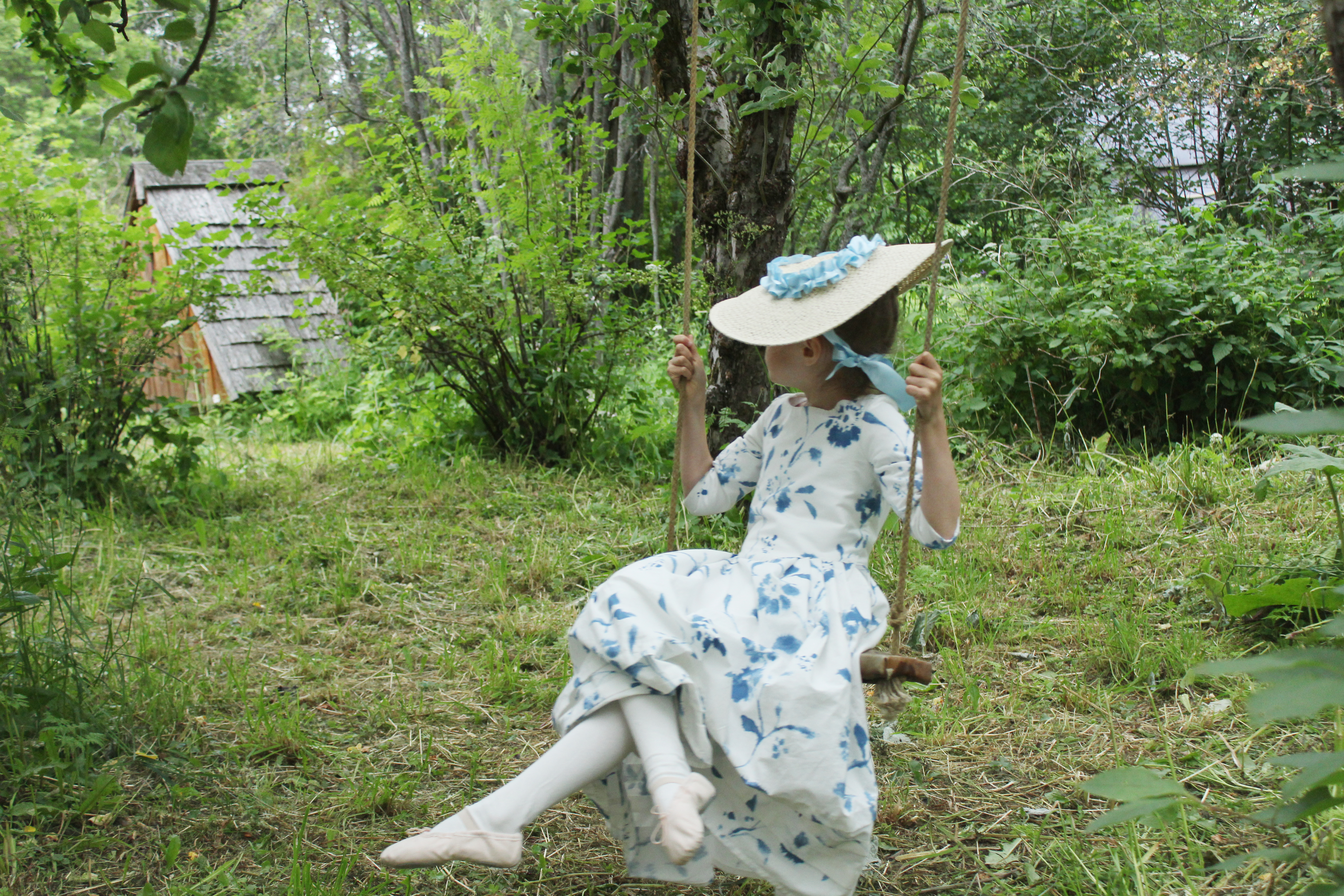
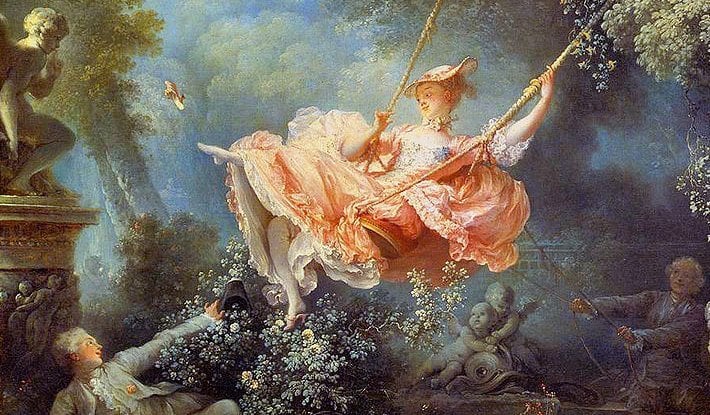
I’m off to work on my next project, a 1780s round gown. Till next time enjoy the pictures we took in our garden and my version of the famous rococo swinging painting! xxx

original can be found here https://www.mayfairgallery.com/media/wysiwyg/fragonard_the_swing.jpg

18th century kerchief and straw hat

It’s been a busy week and I’ve been procrastinating with writing this. Last weekend we had a little meet up with fellow costumers for a tour at Milavida, a russian aristocrat’s home from the 19th century. The second floor is a museum and the first a beautiful cafe. We went on a guided tour of the museum and after for some coffee and cakes and costuming talk, such a wonderful afternoon. I wore my 1780s caraco I made last fall as my first venture into the 18th century. Apparently I have lost some weight since then and my caraco was gaping a bit at the front so I had to safety pin it shut but that made the neckline gape at my shoulder straps, luckily the kerchief covered that 🙂 but it is something I’ll have to fix for future wear.

here is the caraco when I wore it last fall

This time I wanted to wear the caraco with proper accessories that give every costume that authentic flare. First up was a kerchief to protect from the sun and be more modest during the daytime as 18th century dresses can be quite giving esp if you are more amply endowed. I want to make a super fancy one with white work emboidery and everything but for now I just stuck to the basics and made a linen triangle shaped one out of a very fine thin linen. It’s hand roll hemmed with linen thread. Not a super exciting project but it was quick to make and moulds to your neck very well and really does keep you cooler in the sun. It was a very hot day and the museum had no air con so a fancy silk one would have been drenched in sweat!

The second thing I made is a straw bergere hat. Well actually this one I made for my daughter (she helped with the blocking part) but it went well with my caraco so instead of making a new one in a hurry I just used it. I do need to make myself one to wear to a picnic next month though, since she will need this one for herself.

I bought a plain 100% paper straw hat from h&m, we cut the crown about an inch up from the brimm and cut a piece off the crown piece to make it more shallow. Then I wetted the remaining top bit and stretched it around a bowl and we dried it.

After the top had dried I went with the oh so historic construction of hot glueing the crown to the brimm. Since the hat I used was completely woven instead of a sewn braid it frayed alot and would have been a pain to sew on.

Then came the trimming. My daughter chose a light blue satin ribbon and I first basted a gathering thread through the center of the ribbon and folded those gathers into box pleats that I sewed onto the glued edge. After that I attached a piece of ribbon onto the inside of the crown so that the hat could be tied on your head.

I feel for me personally the brimm could be slightly bigger but since this one is actually meant for my daughter it doesn’t really mater since she is 7 and would get swamped under a huge brimm anyways.

Actually I did make a pair of white stockings to wear with this too but since I’m currently embroidering them I’ll post a separate post on them once they are finished. 🙂

I’ll leave off with some (a ton of) pictures of the entire look and hair under the hat, till next time! xxx

my hair is rolled on top into 3 rolls and the sides are rolled on their own and the back is curled and tied with a blue satin ribbon
not the best angle for these but my shoes are curled toe egyptian souvenir mules, not maybe 100% accurate but comfortable and good enough for me

Little boys 18th century suit

Our family’s journey into the 18th century continues. This time I made my nearly 6 year old son a suit. Looking for patterns I ran into the problem of having to buy a separate pattern for all parts except the shirt and that was easy enough to guestimate scale down from the adult version I made with these instructions http://www.marquise.de/en/1700/howto/maenner/18hemd.shtml for my husband. So instead of spending nearly 60 on patterns plus shipping I decided to make my own based of the adult versions.

The pants are patterned by taking the pattern I used for my husbands breeches (the simplicity pirates of the caribbean pattern) and put them over a modern pattern, well modernish since I used a pattern for 30s slacks, to see the differnce in the shape. Basically the breeches have a big center curve in the front similar to modern backs and in the back there is basically none but a slope upward curving down to waist. I took a pattern I have previously used to make the kids some straight leg pants and used that as my guide for drawing out the new pattern with similar changes as the adult versions had. The fabric is a cotton twill I thrifted not knowing what to make out of it that he instantly fell in love with.

Here the modern pattern is in the middle, the breeched back piece behind everything and the front on top so you can see how they work

My son though only 5 loves fiber crafts and wanted to embroider his own buttons for his pants. We looked up pictures of embroidered buttons online and he chose this one.

I slightly simplified the design and drew in onto his fabric and he embroidered it by hand with silk thread.

The waistcoat I modeled on top of a modern vest pattern again useing the waistcoat I made for my husband from the simplicity pattern as a guide. That involved changing the shoulder seams further back and rounding the front seam and angling the lower part of the front towards the back. The fashion fabric is tea dyed Ikea bedsheet I had left over from my caraco and the back and front lining are unstained bits of stained vintage linen tablecloths.

here you can see the original vest lines and how I changed them

For the coat I used this picture as a guide on top of a modern kids pattern again.

The sleeves on the modern pattern were ofcourse one piece and with no elbow curve so I drew it out, cut it into 3 pieces to give me the right piece for the upper part of the sleeve and taped the left over pieces and redrew them to give me the under part of the sleeve. since modern sleeves are looser I also tapered the sleeve a bit to give it a more correct fit. Then I measured were my sons elbow goes and drew it out in a similar angle as the picture. With all this guess work things could have gone badly wrong but luckily it didn’t. Everything fit with only one tiny alteration to the center back seam of the coat to better hug his body instead of hanging limply off him.

Drawing out the sleeve was the hardest bit

Unfortunately I was so much in a hurry to finish that I completely forgot to take anymore process pictures for the coat. It is unlined as summer is coming on fast and my son wished that I make him another one out of wool for when it gets colder and that that one would have a flower lining, so next time more about the process on that one. 🙂

The shirt fabric was stuck in mail for very long so when it finally came I had only 2 evenings to finish it along with finishing up his coat and his sisters dress. So what does a sane person do? Probably would decide that since the other items are atleast partly machine sewn that the shirt should be also. Well since apparently I have a death by sewing wish I sewed the thing by hand! To save time inseat of flat felling my seams I did then in with mantua makers seams instead. I’m not sure if this would be historically accurate for mens shirts but since it’s quick, gives a neat finish and was used in womens clothing at the time I went with it. I’m totally in love now with this seaming technique! The shirt was indeed all sewn up in 2 evenings! Basically the idea is the you turn your seams twice so the raw edge is folded inside the seam and the you hem stitch the fabrics and the folded edge together securing the edge and sewing the fabric together in one neat easy stitch. The buttons are linen tread buttons I made using this tutorial https://fabricnfiction.com/2018/01/31/tutorial-thread-shirt-buttons/ As for the neck I showed him paintings with different style neck closures: buttons, ribbons and links, he chose the ribbon.

Apparently I forgot to cut some thread but we’ll pretend that isn’t there 😀

these breeches needed some pieceing at the waist and in my hurry I did a pretty horrible job at that, they’ll be better next time I make them

Other than a few minor details the entire outfit turned out great and for now they are good enough, next time I make them they will be even better. 🙂 My daughter got sick so we didn’t make it to the picnic these were intended for but since he loves them so much and left wearing them to grandma’s house for a few days I am not too worried about them getting lots of use yet. But for now I’m off to sewing my first dabble into the 19th century, Till next time! xxx

The felt tericorn is a wool felt hat from H&M with the brim sewn up to make a tricorn. Completely by lucky accisent the same color as the suit since the hat was a part of a halloween cvostume 2 years ago.

1780s Belle

Now Finally had time to get some real Disney Princess Belle pictures! I’m so happy with how this entire look came together. You can read about the idea more here https://sewthroughtime.home.blog/2019/04/08/historically-accurate-disney-princess-belle-the-idea/

The outfit consists of a italian gown and a quilted petticoat with a embroidered pocket. If you haven’t already read about my making them they can be found here https://sewthroughtime.home.blog/2019/04/13/quilted-petticoat/ and here https://sewthroughtime.home.blog/2019/04/26/tale-as-old-as-time-pockets/ Ofcourse I am also wearing a shift (the undies of the 18th century), stays (18th century version of a corset to get the conical shape) and split rump to get that big butt action of the late 18th century, these are all from a previous project from before I started blogging.

I made this outfit for an 18th century masquarade ball this spring and there I did my hair in a more historically accurate style rather than going full on disney Belle.

Then this week when all the spring flowers bloomed we went to take some pictures in true Disney princess style with my hair done up more accurate to the movie look.

And now on to the picture galore! If you look closely at my gown skirts you can notice I’ve tied them in several different ways for the pictures, each giving a slighty different effect.

this pleating is really my favorite part of tghe italian gown
the quintessential princess twirl

And one last one with hubby, more about his outfit later. Now I’m off to making the kids some 18th century garments for a picnic coming up soon… 🙂

Belle’s italian gown construction

Ever since I started down the 18th century costuming rabbit hole I’ve loved the italian gown, the fitted back that ends in that deep v with a slip rump to give your derriere that extra oomph. The reason why I decided to make Belle’s gown an italian gown instead of the sack back that would be from the 1740s when the book first came out was that fitted back and flowing skirt. As much as I’ve loved the francaise gown Belle costumes I’ve seen others make it lacks that one thing why I think the animators originally went with a 19th century ball gown instead of 18th century, that princess skirt twirl! You know the one every little child does as soon as they get that princess dress on. A francaise moves beautifully but those loose back pleats just do not twirl the same.

here is the francaise from Belle’s time
and here is the fitted back of an italian gown

I started mine by printing out the italian gown pattern in the American duchess guide to the 18th century dressmaking https://www.american-duchess.com/book/american-duchess-guide I scaled the pattern as near as I could to what I thought would be my measurements and printed it, then taped the pieces together to form a pattern and traced it onto pattern paper and muslin to make my mock up. American duchess blogged about scaling these patterns up to make a printable sheet and since her way seems much more accurate than mine I’ll just link that instead of explaining how I did it. http://blog.americanduchess.com/2019/04/how-to-scale-up-gridded-sewing-patterns.html

First mock up was slightly loose but otherwise ok
I sewed the mock up quick and dirty on the machine, marked any nececary changes on it and ripped it open and used that as my pattern pieces and as my lining on my gown

cutting into silk is very terrifying

All the sewing I did by hand with silk thread using the instructions in the american duchess guide. All in all I’m happy with it but in the armpit area my stitches on the inside are pretty messy. Also I’m not sure how but somehow I goofed and managed to make the lining too small on the other arm so there is tiny bit of silk peeking out on the inside.

first try prooved that I had somehow managed to miscalculate and ended up making the back pieces too big. Here I have to give huge credit to hubby who patiently pinned this all in place for me despite his complete lack of interest in sewing
since the front didn’t need any fussing with I finished it off with a running stitch
Here is the side back seam with the lining sewed on to the front pieces
One last check before cutting the lining and sewing the fashion fabric on top
the fashion fabric gets sewn on top of the side back seam in a curve to give an illusion of a smaller waist

fitting with the back side seams sewn up
the front is still a bit floppy in this one but here I’m setting the sleeve, the front is smoothed out against the shoulder strap so that the extra volume that allows your arm to move gathers in the back
here you can see how the fabric gathers in the back of the arm to give full range of movement
the sleeve is first rather crudely sewn onto the shoulder strap lining
then the fashion fabric is pinned onto the shoulderstrap hiding all that messy stitching
I prick stitched the long sides and aplique stitched the short edges of the shoulder strap to the gown
Here is that messy inside bit at the armpit. I’m not too worried about it though because slightly messy is completely authentic though I think mine is a bit more than usual

Next came the pleating of the skirt part. I decided to leave the edges unturned as the selvedge gave a nice firm edge to it so I just sewed the skirt pieces together and started pleating. I used the stripes in my fabric as a rough guide and pleated it so that 2 pleats made up the width of one stripe. So always one opposide colored stripe ended up completely hidden, luckily this added up to pretty much the width I needed.

here the fabric is all pleated and pinned to correct size
in this one you can kind of see the color changes in the pleats, this proved near impossible to photgraph with the silk shining and the srtipes being so similar in color
gown pinned ontop of the skirt
I applique stitched the bodice to the skirt
after attaching the bodice to the skirt I ripped open the top and folded it down leaving the extra fabric to give the skirt more lift
after sewing the skirt on and opening the back seam enough to let the extra fabric to fold down I stitched the back of the pleats down a little under the seam to keep the pleats from opening up too soon

After hemming the gown so that the back sweeps the floor and the sides come up to my ankles I added bias tape loops to the lower part of the skirt and ribbons to the back waist so that you can lift the skirts up in differnt ways to keep it off the ground.

dress guts! 😀

All finished! Well this post ended up so long that I’ll leave the action pictures for the next post except for thi one back view. See you then!